





Energy Gel Comparison — Spring vs Maurten, SiS, GU, Huma and Precision
Same grams. Different molecules. This page puts Spring's published nutrition panels next to the figures other brands publish, on the one measure that decides how much you carry — grams of carbohydrate — and then shows what that carbohydrate is actually made of.
Brand-versus-brand comparisons are usually useless, because the products inside a range are further apart than the ranges are from each other. Our own line runs from 12 g of carbohydrate per serving to 50 g. So this compares product to product, and every competitor figure is linked to the page we took it from.
Carbohydrate per serving
The number that decides how many pouches go in the vest. Sorted highest first, ours in green.
| Product | Carbohydrate per serving |
Calories | Serving | What the carbohydrate is |
|---|---|---|---|---|
|
Peach Cobbler Gel XL Spring |
50 g | 210 kcal | 110 g pouch | Raw honey, peaches, basmati rice, bananas, cashew butter |
|
Matcha Berry Meal Spring |
44 g | 310 kcal | 110 g pouch | Oats, maple syrup, strawberries, chia seeds |
|
SiS Beta Fuel Gel scienceinsport.com |
40 g | Not published | Not published | Maltodextrin and fructose, 1:0.8 ratio |
|
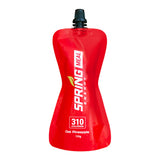
Wolf Pack Spring |
39 g | 310 kcal | 110 g pouch | Oats, banana, pineapple, honey, papaya, date |
|
Precision Fuel PF 30 Gel precisionhydration.com |
30 g | Not published | Not published | Not published as text |
|
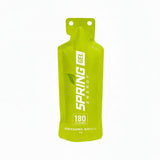
Awesome Sauce Spring |
28 g | 180 kcal | 60 g pouch | Apple juice, basmati rice, apple sauce, maple syrup, sweet potato |
|
Lemon Power Snack Spring |
25 g | 100 kcal | 53 g pouch | Basmati rice, lemon, honey, grapefruit powder |
|
Maurten GEL 100 maurten.com |
25 g | 100 kcal | 40 g | Glucose and fructose, 0.8:1 ratio, in a sodium alginate hydrogel |
|
Huma Chia Energy Gel (Blueberry) Huma panel as listed by REI |
24 g | 100 kcal | 43 g | Blueberry purée, cane sugar, brown rice syrup, chia seed powder |
|
Açaí Power Snack Spring |
23 g | 100 kcal | 53 g pouch | Basmati rice, açaí berry, maple syrup, lemon juice |
|
Blueberry Meal Spring |
22 g | 310 kcal | 110 g pouch | Oats, blueberries, maple syrup, cashew butter, açaí |
|
GU Energy Original Gel guenergy.com |
21–23 g | 100 kcal | Not published | Not published as text |
|
Orange Power Snack Spring |
21 g | 100 kcal | 53 g pouch | Orange juice, basmati rice, maple syrup, ginger juice |
|
Mango Mint Spring |
20 g | 120 kcal | 49 g pouch | Mango, basmati rice, banana, honey, coconut water |
|
Long Haul Spring |
19 g | 140 kcal | 52 g pouch | Basmati rice, banana, peanuts, honey, molasses, orange juice |
|
Canaberry Spring |
17 g | 100 kcal | 46 g pouch | Basmati rice, banana, strawberry, maple syrup, coconut water |
|
Speednut Spring |
12 g | 250 kcal | 52 g pouch | Blackberry, raspberry, strawberry, basmati rice, maple syrup |
Read this table by row, not by brand. Peach Cobbler Gel XL carries 50 g of carbohydrate in a single pouch — more than a SiS Beta Fuel gel at 40 g, and more than two Maurten GEL 100s. At the other end, Speednut carries 12 g, because it is a 250-calorie fat-based product for long slow efforts and was never built to hit a carbohydrate target. Both facts are true at once. That is the whole reason this page exists.
Carbohydrate density
Carbohydrate per 100 calories — the fair way to compare products of different sizes. Shown only where the manufacturer publishes both figures in text.
| Product | Carbohydrate | Calories | Carbohydrate per 100 calories |
|---|---|---|---|
| Lemon Power Snack | 25 g | 100 kcal | 25 |
| Maurten GEL 100 | 25 g | 100 kcal | 25 |
| Peach Cobbler Gel XL | 50 g | 210 kcal | 24 |
| Huma Chia Energy Gel | 24 g | 100 kcal | 24 |
| Açaí Power Snack | 23 g | 100 kcal | 23 |
| Orange Power Snack | 21 g | 100 kcal | 21 |
| Mango Mint | 20 g | 120 kcal | 17 |
| Canaberry | 17 g | 100 kcal | 17 |
| Awesome Sauce | 28 g | 180 kcal | 16 |
| Matcha Berry Meal | 44 g | 310 kcal | 14 |
| Long Haul | 19 g | 140 kcal | 14 |
| Wolf Pack | 39 g | 310 kcal | 13 |
| Blueberry Meal | 22 g | 310 kcal | 7 |
| Speednut | 12 g | 250 kcal | 5 |
This is the parity claim, stated precisely. Lemon Power Snack at 25 g of carbohydrate per 100 calories matches a Maurten GEL 100 exactly. Peach Cobbler XL and Huma's Chia gel both sit at 24. Four Spring products sit at 21 or above. What is not true is that the whole range matches every gel gram for gram — Speednut and the Blueberry Meal are deliberately fat-based, and we would rather say so here than have you discover it mid-race.
What the carbohydrate actually is
Every brand publishes its ingredients, so this column is the most reliable comparison on the page — and it is the actual difference between these products.
| Approach | Carbohydrate sources, as published | Examples |
|---|---|---|
| Engineered carbohydrate | Maltodextrin and fructose; or glucose and fructose in a sodium alginate hydrogel | SiS Beta Fuel (maltodextrin : fructose, 1:0.8); Maurten GEL 100 (glucose, fructose, sodium alginate) |
| Real food with added syrups | Fruit purée plus cane sugar and brown rice syrup | Huma Chia Energy Gel (blueberry purée, cane sugar, brown rice syrup, chia seed powder) |
|
Real food, no added syrups Spring |
Basmati rice, oats, whole fruit, honey and maple syrup. No maltodextrin, no rice syrup, no added cane sugar. | Awesome Sauce (apple juice, basmati rice, apple sauce, maple syrup); Peach Cobbler XL (raw honey, peaches, basmati rice, bananas, cashew butter) |
All three approaches deliver carbohydrate. Maltodextrin is not poison and a hydrogel is not a gimmick — they are well-evidenced ways of getting sugar into a working muscle, and plenty of athletes race on them very successfully. Spring exists for the people those products have not worked for, and for the people who read the label and would rather eat food. That is a preference and a tolerance question, not a safety claim.
Why this comparison has holes in it
What we could not verify, and why
- Most competitors publish nutrition panels as images, not text. We can cite carbohydrate per serving because brands put it in their marketing copy. Calories, sodium and full ingredient lists are frequently only in a picture of a label, which we are not prepared to retype and present as fact.
- Sodium is not compared here at all. Only one of the five competitor products publishes a single sodium figure in text — Huma at 105 mg. GU publishes a range of 60 to 125 mg across flavours; the others do not publish it in text. A sodium column with four empty cells would be worse than no column. Spring's sodium is published per product on our nutrition data page, and the sweat rate calculator works out how much you actually need.
- Flavours differ within a product line. The Huma figures are for Blueberry, which is the flavour Huma's own panel documents; other flavours vary.
- Nine of our own products are missing. Seven drink mixes and two protein shakes have no verified nutrition panel on file yet, so they are not on this page. We are not going to fill them in from marketing copy.
- Figures change. Everything here was checked on 14 August 2026 against the linked pages. Manufacturers reformulate. If you spot a figure that has moved, tell us and we will correct it.
Turn this into a plan
Grams per serving only helps once you know how many grams you need.
Common questions
How does Spring Energy compare to Maurten?
On carbohydrate density they are the same. Maurten GEL 100 carries 25 g of carbohydrate in about 100 calories. Spring's Lemon Power Snack carries 25 g in 100 calories, and Açaí Power Snack carries 23 g. The difference is the ingredient list, not the gram count. Maurten's carbohydrate is glucose and fructose in a sodium alginate hydrogel; Spring's is basmati rice, fruit and honey or maple syrup. If you want more carbohydrate per pouch than either, Peach Cobbler Gel XL carries 50 g.
How does Spring Energy compare to Huma?
Very closely on the numbers, and that is worth being straight about. Huma's Chia Energy Gel is 24 g of carbohydrate in a 100-calorie, 43 g packet with 105 mg of sodium. Spring's Lemon Power Snack is 25 g in a 100-calorie, 53 g packet with 100 mg of sodium. Both are real-food gels. The distinction is in what the carbohydrate is made of: Huma's listed carbohydrate sources are fruit purée, cane sugar and brown rice syrup; Spring's are basmati rice, fruit, honey and maple syrup. We skip rice syrup and cane sugar. Whether that matters to you is a fair question to ask your own stomach.
Is Spring Energy lower in carbohydrate than other gels?
It depends entirely which Spring product you mean, and this is where a single answer would be misleading. Peach Cobbler Gel XL carries 50 g of carbohydrate in one pouch, which is more than a SiS Beta Fuel gel at 40 g or a Precision PF 30 at 30 g. Lemon Power Snack matches a Maurten GEL 100 exactly at 25 g. But Speednut carries 12 g and the Blueberry Endurance Meal 22 g, because those two are built as fat-based, calorie-dense options for long slow efforts rather than as carbohydrate tools. Compare product to product, not brand to brand.
Does Spring Energy use maltodextrin?
No. No Spring product contains maltodextrin, rice syrup or added cane sugar. The carbohydrate comes from basmati rice, oats, fruit, honey and maple syrup. For contrast, SiS Beta Fuel's published carbohydrate is maltodextrin and fructose in a 1:0.8 ratio, and Maurten's is glucose and fructose in a sodium alginate hydrogel. All three approaches deliver carbohydrate; they are just different molecules arriving by different routes.
Which gel is best for a sensitive stomach?
There is no honest brand-level answer to this, because GI tolerance is individual and the research on it is about concentration and osmolality rather than brand. What can be said factually is that conventional gels concentrate carbohydrate from maltodextrin and fructose, and that highly concentrated solutions draw water into the gut. Real-food gels typically arrive less concentrated and with the carbohydrate bound up in food. If gels have failed you before, the variables worth changing are the hourly rate, the amount of fluid you take with them, and the carbohydrate source. Test all three in training, not on race day.
Why doesn't this page show sodium and calories for every competitor?
Because most brands publish their nutrition panel as an image rather than as text, and we are not willing to retype numbers we cannot cite. Every figure in the tables above is linked to the page it came from, and where a manufacturer does not publish a figure in text, the cell says so. We would rather have gaps than invent numbers, including about competitors.
How do I know Spring's own numbers are right?
Every Spring figure on this page comes from our published nutrition panels, and the complete per-product data — including sugar, fat, protein, fibre, potassium, caffeine, allergens, full ingredient lists and cost per gram of carbohydrate — is on our nutrition data page so you can check the arithmetic yourself. Nine products have no verified panel yet: seven drink mixes and two protein shakes. They are excluded from this page rather than filled in from marketing copy.
Spring figures are from our own published nutrition panels — full data on the nutrition data page. Competitor figures are quoted from the manufacturer pages linked in each row, checked 14 August 2026: Maurten, Science in Sport, GU, Precision Fuel & Hydration, Huma. All products are gluten free but not third-party certified. Nothing on this page is medical advice.