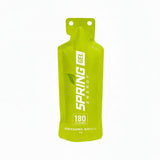
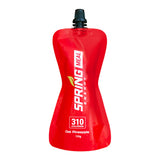
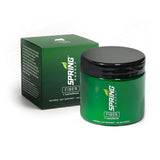






Energy Gels Built by a Scientist, Easy On Your Stomach
Real food. Real performance.
Energy gels built by a scientist who got tired of racing with a bad stomach.
Rice, fruit and honey instead of maltodextrin and glucose syrup. Carbs your gut can actually process at mile 18, made from ingredients you can pronounce, each one chosen on purpose.
No maltodextrin. No artificial flavors. No preservatives. Every batch verified by an independent lab. Trusted by ultrarunners, cyclists and triathletes since 2014.

You trained for months. Your fuel shouldn't be what stops you.
More than half of athletes on long efforts deal with stomach trouble, and by the time it hits, there is nothing to do but slow down.
Traditional gels are built from maltodextrin and refined sugar syrups because those are cheap and shelf stable, not because they work with your body. Squeeze a concentrated dose of a single sugar into a gut that is already short on blood flow and somewhere past hour two it turns into sloshing, cramping and the bathroom math nobody wants to do mid-race.
If you have ever dreaded taking your next gel, it's not you. It's the gel.
Why a scientist started making gels
Rafal spent two decades studying how cells make energy and how oxidative stress wears them down. Then he started running ultras, and the fuel on the shelf did not hold up to what he knew about the gut.
He had the lab background to know why. He had the mileage to know it mattered. What he did not have was a gel he could hand to the athletes he worked with and mean it.
So in 2014 he started making fuel in a kitchen, from food, the way his research said energy is meant to arrive: a mix of carbohydrate sources, a little fat and salt, nothing his gut would have to fight. Every recipe was tested on long runs before it was ever tested by a lab. Every ingredient earns its place or gets cut.
"Sports nutrition was made of ingredients that work for manufacturers, just because it is easy and cheap to make energy gels out of sugar. You deserve fuel that works with your body, not against you."
Rafal Nazarewicz, founder
The person behind the recipe
What's different
Three decisions traditional gels never made
Each one comes from the lab and gets confirmed on the trail. Together they are why athletes who switch to Spring tend to stay.
Carbs your gut can process
Instead of one refined sugar at a high concentration, Spring gels carry a mix of carbohydrate sources from rice, fruit, honey and maple. Different sugars use different doors into the bloodstream, so more energy gets absorbed and less sits in your stomach pulling in water.
The result athletes describe most: they can take the next gel without thinking about it.
Built with your microbiome in mind
What you eat during a race is still what you eat. A gel that is one single refined carbohydrate feeds your gut one thing, hour after hour, race after race. Real food brings variety, natural fiber and fats along with the carbs, the way your gut bacteria are used to being fed.
Formulated to support comfortable digestion during and after the effort, not just to hit a carb number.
Every ingredient has a job
Basmati rice for steady carbohydrate. Bananas and fruit for quick sugars and potassium. Honey and maple for fast energy that still tastes like food. Coconut oil or nut butter for calories that last. Salt because you sweat. Nothing added to make it cheaper, sweeter or last longer on a shelf.
Six month shelf life with no preservatives. Real looks a little cloudy. That is the point.
What's inside
Ingredients you can pronounce, exactly as printed on the pouch
Canaberry
Strawberries, maple syrup, basmati rice, bananas, coconut oil, soy lecithin, lemon juice, salt, citric acid, guarana, vitamin C.
Everyday trainingLong Haul
Bananas, peanut butter, honey, basmati rice, oil, chia seeds, soybean lecithin, citric acid, salt.
Long effortsAwesome Sauce
Maple syrup, basmati rice, apple juice concentrate, MCT oil, avocado oil, applesauce, sweet potato, cinnamon, sea salt, vanilla powder.
High outputMacros verified batch by batch by an independent lab. See the lab test results
Athletes who switched, and stayed
What it feels like when your stomach stops being the limiter
★★★★★"Blocks and other gels would leave my stomach in a knotted mess within 15 to 20 minutes, and I haven't had any issues with Spring Energy!"
Mary Elizabeth · long run fueling
★★★★★"Completed my last 50K with Spring Energy Gels and never had any stomach or bonking issues."
Caileigh · ultrarunner
★★★★★"Your product is a game changer for me!"
Heather R. · half marathon PR
Where to start
Not sure which one? Match the gel to the effort.
Bestseller Sampler
Four bestselling gels plus a Blueberry Endurance Meal, shipped free. The lowest-risk way to find out how your stomach feels about real food.
5 items · $25.99 · free US shipping · limit one per customer Get the samplerCanaberry
Light, fruity, vegan. The one to reach for on tempo days and the first hour of anything.
100 kcal · 17 g carbsLong Haul
Peanut butter, banana and honey with a little protein. Built for the hours where sweet stops working.
140 kcal · 19 g carbsPeach Cobbler XL
Raw honey, peaches, rice and cashew butter. A double serving for the days that go past dark.
210 kcal · 48 g carbsQuestions athletes ask
Straight answers
Why do regular gels upset my stomach?
What makes Spring different from traditional gels?
Are the gels vegan and gluten free?
How many gels do I need per hour?
Do any Spring gels have caffeine?
What if my stomach still doesn't like it?
Bring back the joy of training
Fuel that works with your body, not against it.
Reach your results in a way you enjoy. Fuel that tastes like food, holds up when it matters and lets you think about the trail instead of your stomach.