






Team Guide

Say it your way.
Keep it real.
This guide gives you the core ideas behind Spring Energy so you can share them in your own voice. You know your training. You know your gut. Tell that story. These are the themes that matter most to the athletes we serve.

Start here
What athletes actually deal with
GI distress mid-effort
Cramping, bloating, and nausea at mile 18, hour 4, or the back half of a long ride. Gut trouble is one of the most common reasons athletes abandon races or cut training short.
Energy spikes and crashes
Sugar-heavy gels can send blood glucose up fast and drop it just as hard. That rollercoaster is especially punishing on long efforts where you need steady output.
Ingredients that don't add up
Athletes train clean, recover intentionally, and eat with purpose. Then they look at their gel label and see maltodextrin, rice syrup, glucose, and fructose as the first four ingredients.
Fueling feels like a gamble
Race day nutrition should not be something you stress about. But for a lot of athletes, it is. They've learned the hard way which gels their stomach tolerates and which ones don't.
Texture and taste fatigue
Four hours into a long run or a century ride, that synthetic sweetness gets hard to stomach. Athletes want fuel that actually tastes like food.
Recovery feels incomplete
Repeated hard sessions leave athletes searching for nutrition that supports repair, not just calories in. What you eat before, during, and after matters to how the next day goes.
What athletes say matters most when choosing fuel
Responses from endurance athletes on their primary fueling priorities.
The top three priorities, real food health benefits, GI comfort, and stable energy, are exactly what Spring Energy was built around. They are also the three things conventional gels address least.
During hard or long exercise, blood is redirected away from the digestive tract to working muscles. This makes the gut wall more vulnerable. When the fuel hitting that stressed lining is a high-osmolality mix of refined starches and sugars, it increases the risk of cramping, permeability issues, and inflammation. Research shows that ultra-processed carbohydrate sources can reduce gut microbial diversity and lower production of short-chain fatty acids like butyrate, which protect the intestinal lining.
Whole-food carbohydrate sources, like basmati rice, fruit, and honey, carry small amounts of fiber, organic acids, and natural compounds that slow absorption and support the mucosal layer without sacrificing energy delivery. The gut and the muscle need each other. When one fails, both suffer.
van Wijck K, et al. Physiology and pathophysiology of splanchnic hypoperfusion and intestinal injury during exercise. American Journal of Physiology Gastrointestinal and Liver Physiology (2012).
Laudisi F, et al. The food additive maltodextrin promotes endoplasmic reticulum stress-driven mucus depletion and exacerbates intestinal inflammation. Cellular and Molecular Gastroenterology and Hepatology (2019).
Liu P, et al. The role of short-chain fatty acids in intestinal barrier function, inflammation, oxidative stress, and metabolic diseases. Pharmacological Research (2021).
Core messaging
Five talking points that tell the Spring story
Use these as starting points. Adapt them to your own races, training blocks, and experiences. The best post you can write is one that sounds like you.
Sports nutrition was built for convenience, not for your gut.
Most gels are made with maltodextrin, rice syrup, glucose, and fructose because those ingredients are cheap, shelf-stable, and easy to produce at scale. They were not chosen because they work best with your digestive system during a hard effort. That's the honest truth.
You deserve fuel that works with your body, not against it.
You put serious effort into training, sleep, and recovery. Your fuel should support that, not create another problem to manage. Real food, whole ingredients, and honest formulation are not a luxury. They're what endurance athletes actually need.
Real food delivers steady energy. Rice, honey, fruit, and fats actually work.
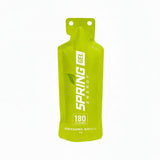
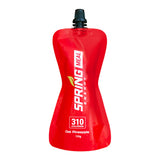
Spring Energy gels are made from basmati rice, honey, fruit, and nut butters. These aren't just cleaner ingredients. They deliver a balanced carbohydrate and fat profile that supports long, steady output without the sharp spikes and crashes that refined sugars produce. Your gut recognizes them. Your body knows how to use them.
Fueling should be something you trust, not something you stress about.
Race nutrition is a calculated risk for a lot of athletes. You've probably been there. Testing gels on training runs, building a list of what your stomach tolerates, crossing your fingers on race morning. It should not be that complicated. When your fuel is built from food your body already knows how to process, that uncertainty shrinks.
You're not just choosing a cleaner label. You're racing on fuel built for how your body works.
Spring Energy was started by endurance athletes and scientists who wanted the same thing you do. Fuel that tastes real, performs consistently, and doesn't compromise your gut every time you use it. The goal has always been simple: bring back the joy of training with fuel that makes you feel good.

Voice guide
How to sound like yourself and stay on brand
- Lead with your own experience. "On my last 50K..." beats a product description every time.
- Talk to all endurance athletes. Road runners, ultrarunners, cyclists, triathletes all deal with the same gut challenges.
- Mention specific ingredients by name: basmati rice, honey, almond butter, real fruit.
- Focus on how you feel during and after fueling: steady, focused, comfortable.
- Keep it honest. If one product works better for you at certain distances, say that.
- Short sentences. Plain language. Like you're talking to a training partner.
- No "clean eating" or "eating clean" framing. It can sound like judgment.
- Skip broad health claims not tied to performance. Keep it in the endurance context.
- Don't talk about what other brands put in their products. Let Spring speak for itself.
- Avoid preachy or lecturing tones. You're sharing what works for you, not converting anyone.
- No fabricated stats or numbers you can't back up. Athletes will notice.
- Don't confuse Spring Energy and Energlee. They are separate brands. Keep them that way.
Ready to adapt
Phrases to make your own
These are starting points. Rewrite them in your voice, add your race or training context, and they become yours.
One last thing.
The best thing you can say about Spring Energy is the true thing. What happened on your last long run. What your gut felt like at hour three. Why you started fueling differently. That's the story that lands with other athletes, because they've been in the same spot.
Tag us at @spring_energy and #springenergy. We want to see your posts and share what you're doing out there.